Thursday, 16 May 2013

Not Going Out - Part Two


In my previous post I argued that many professional people had been priced out of pubs by the high cost of beer, (and other drinks). An unfortunate side effect of this is that licensees have tried to make up the shortfall by appealing to those who can still afford several nights a week in their local boozer. Two or three decades ago this group would have comprised well-paid industrial workers, coal miners and people involved in activities such as steel making or heavy engineering. However, with the decline in these industries,  pubs had to look elsewhere for the bulk of their trade. For a while, during the construction boom at the end of the last century and beginning of this one, there were large numbers of skilled tradesmen, bricklayers, plumbers and electricians, all with plenty of spare cash in their pockets and looking for somewhere to unwind after a hard day’s graft. The pub provided the opportunity for them to relax and enjoy a few drinks with their mates, or fellow tradesmen.

All this changed, of course, with the financial crisis of 2008, followed by the loss of confidence, and collapse in demand for new housing and other property developments. The effect on the construction industry was devastating, and many skilled tradesmen found themselves out of work. Once again, a lot of pubs ended up bereft of a large proportion of their regular trade, but this time there was no obvious group to replace them. In desperation, many landlords decided that what their customers wanted was a regular diet of Sky Sports, so they subsequently invested heavily in this area, in the hope it would pull in the punters.

In a way it did, but lager-swilling louts wearing football shirts aren’t really the sort of customers conducive to a friendly relaxed atmosphere, and the end result has been that a large number of pubs now resemble American bars. Step inside and there is no escape from the all pervasive TV screens, or the foul language of some of these so-called football supporters.

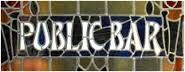
The fact that so many formerly unspoilt locals have ended up like this is sufficient to deter people like me from ever setting foot in them again, but this situation would not have arisen if back in the 1970’s the brewers, who were the main pub owners at the time, hadn’t embarked on a program of knocking down internal walls and removing the age old distinctions between public and saloon bars. At least in those days if one didn’t like the crowd in the public bar, one could escape to the saloon and vice versa. Now, with so many pubs resembling nothing more than soulless, single room "drinking barns", there is no escape. On top of this comes the more or less universal assault on ones ear-drums from juke boxes, piped muzak or the all pervasive television. Why do landlords and bar staff think that everyone shares their dubious taste in music?  Why do they think we want to watch horse racing, golf, snooker or any number of other sporting pursuits?

Some licensees have tried, with some degree of success, activities such as quiz nights, to help to bring the punters in, but things such as karaoke nights or poker evenings are nothing but a major turn off so far as I am concerned, and smack of desperation. As for the effect of the smoking ban, well pubs were in decline for a long time prior to the introduction of that ill thought out piece of legislation.

Some pubs have moved in the opposite direction and now function as little more than high class restaurants. On the whole, food is a development that ought to be welcomed in pubs, so long as they continue to provider a reasonable amount of space for people who just want to drink. 

So what’s to be done to encourage people like me, and others, to return to the pub? Well, although it would be nice, it would be naive in the extreme to expect a return to two, or even multi-bar pubs, but I can’t help thinking that the rush to do away with what were considered as “outdated symbols of class division” was the start of the slippery slope in the pub’s long decline.

What I do see though from my admittedly infrequent forays into pub land, is that pubs which offer a good range of well-kept cask beers, together with decent continental lagers, and possibly the odd craft beer as well thrown into the mix, are thriving. So are those pubs where convivial conversation and friendly pub banter still rule the roost. There are several pubs in both Tunbridge Wells and Sevenoaks that fall into these categories, but I can’t really think of any that fit the bill in my home town of Tonbridge, although one or two perhaps come close.

If I was to win the lottery I would be tempted to buy a pub and put some of my ideas into practice, but until that unlikely day happens I’ll continue to do most of my drinking at home, whilst making the occasional foray into pub land.

I don't want to come across as a snob here. Back in my youth I was equally at home in both public and saloon bars; my choice being dictated by the situation and the company I was with. For example, a night out with my mates would normally be spent in the public bar,  enjoying a game of darts or cribbage. Music would be provided by the juke box, where we, the punters, chose what was played rather than the bar staff. If one was entertaining a member of the opposite sex, then the saloon was the bar of choice. More refined, quieter (the music from the juke box in the adjoining bar, didn't normally carry through), and  more comfortable surroundings. Things were much more civilised back then.

Monday, 13 May 2013

Not Going Out - Part One


I have written before about how I changed from a regular pub-goer to a rather infrequent one and, following a recent post by Curmudgeon, I’m prompted to write again. Curmudgeon suggests that going to the pub for a drink has become much less socially acceptable over the years. I disagree, as to claim that pub going it is becoming more sociably unacceptable is to suggest that it is an activity that is frowned upon, or is even something which society as a whole does not approve of.

Whilst the latter point may well be the case amongst a small minority of rabid teetotallers I think it is less true than it was 40 years ago when I first started drinking. It was not, for example, an activity which my mother approved, and I would say it is something she still doesn’t much approve of today. Back in my schooldays, I can even remember one teacher, a Methodist lay-preacher no less, describing public houses as “dens of iniquity and inebriation”. Marvellous stuff, and like a throw-back to the height of the Temperance movement in Victorian times!

However, leaving questions of maternal and scholarly approval to one side, I would argue that people have stopped visiting pubs as frequently as they once did, not because it’s socially unacceptable, BUT because it’s either too expensive, or they have other, more important or interesting things to do with their time and their money.

Taking the financial argument, I am convinced that the price of a pint represents a far larger proportion of average take home pay than it did say 20 or 30 years ago. For example, back in the early 1980’s,  I always seemed to have money for a pint whenever I felt like one, whereas now, despite my wages having probably quadrupled, an evening in the pub is an occasional treat rather than an everyday occurrence. Incredible, really; I earn far more than I’ve ever done before and yet I can’t afford to go to the pub with anything like the frequency I once used to. Something is definitely wrong somewhere!

Of course there are other factors to take into consideration.  For a start my mortgage is considerably larger than it was 30 years ago, and there have been other large, inflation-busting increases in things like council tax, gas, water and electricity bills I run a car now, instead of relying on public transport to get around. I am also fortunate to be able to take more holidays, and these of course have to be paid for. All these factors add up to there being less money available for going to the pub.

It seems that whilst living standards have generally risen the price of a pint has risen much higher, and is now proportionally far higher than it has ever been. This is the MAIN reason why so many people, myself included, have stopped going to the pub on a regular basis. In short, WE JUST CAN’T AFFORD IT!

Wednesday, 8 May 2013

Support British Hops!

"Support British Hops!" So said the leaflet handed out to those drinkers in the Bedford, Tunbridge Wells  last Saturday who were willing to try and comment on the intriguingly titled "Enigma Ale". This 4.8% beer had been specially brewed by Canterbury Brewers, who are based at the Foundry Brew-Pub in the cathedral city.using an unknown variety of hop. The man behind the beer  is world-renowned hop expert, Dr Peter Derby of the National Hop Collection, and the idea is to provide feedback to assist both growers and brewers to choose what could potentially be a new variety of British hop. As the leaflet says: 
 
"The beer in front of you has been brewed with a unique hop, grown in Britain, that may have never been tasted before. We have been asked by Dr. Peter Derby of the National Hop Collection to brew with an unknown hop variety. This could be a historical variety not brewed with for a hundred years or a brand new variety never tasted anywhere in the world before. We’ve brewed the beer, now we’re asking for your help to give the growers some feedback on the flavours. We have used the hops throughout the brewing process to show all of the flavours possible.  Your feedback will be taken seriously and by giving us an honest appraisal you will be helping to sustain one of the proudest features of our local landscape."

Anyone ordering a glass of Enigma was given a form, complete with a flavour wheel, and ask to score the beer according to eight different flavour groups, (Citrussy; Fruity; Floral; Herbal; Spicy; Resinous; Sugar-like; Miscellaneous), and using the following guidelines.

"Everyone’s palate is different and there are no wrong answers in taste, in order to help with clear flavour definitions we have provided a flavour wheel for your use. Any of the flavours in the segments (eg. orange, mandarin) are part of the flavour group heading (eg. Citrusy), if you detect these flavours then give a rating from 0-7 in the box provided. Please give an intensity rating for all eight flavour groups."

Of course, the correct balance of malt flavours also plays an important role in the overall taste and balance of the finished beer, and I think the people behind the project were right in choosing an innovative company, like Canterbury Brewers, whose portfolio includes a wide range of different beers and styles, to produce the beer for them.

Presenting the beer in such a fashion, with an intriguing name, an eye-catching pump-clip and, most importantly as a totally blind tasting, seems an excellent way of  dispelling preconceptions and providing some completely unbiased feedback. It certainly worked last Saturday, as most of us present in the pub gave the beer a try. So what did it actually taste like?  Well, I found it quite citrussy. especially on the nose, but there were also spicy and resinous components present as well. It was certainly a beer with character, and one I would be quite happy to drink on a regular basis.

I shall be keeping an eye om Canterbury Brewers website to find out what hop variety was actually used and whether it is an old or a brand new one. Whatever the answer, if it helps give a much needed boost to the British hop industry, then it gets my vote.

Monday, 6 May 2013

Pub of the Year 2013


In common with most, if not all, local branches, West Kent CAMRA run a Pub of the Year competition, usually abbreviated to POTY – an acronym I cringe at every time I hear it, even if it does save a bit of typing!  I don’t know whether this competition is obligatory for branches, or quite how it even came about, but our branch has been awarding this honour for as long as I can remember.

 When we first started running the competition, pubs were selected purely on the basis of numbers of votes received, after the membership had been asked to vote for their favourite pub by means of a form printed inside our then branch magazine, “Inn View News”, (now sadly defunct). Unfortunately this system was found to be open to abuse, as well as not making it entirely clear as to what the criteria for election were. I think that it was around this tine that CAMRA nationally set out the areas which pubs were not only to be selected on, but scored on as well. I can’t remember all of them, although I’m certain they’re buried somewhere on the national website, but obviously beer quality is the most important, followed by other criteria, such as the welcome received from bar staff, involvement of the pub with the local community, whether the pub was involved in, or actively supported CAMRA’s aims and campaigns.

  Following these guidelines, the branch strategy changed, and we began organising trips, by mini-bus, around a maximum of six short-listed pubs, which had been chosen by members at our annual Good Beer Guide selection meeting. The Pub of the Year was then selected from the scores awarded for each pub by all members participating in the trip, following the guideline criteria set out by CAMRA. In an attempt to present a more level playing field, there was a “weighting formula” applied to certain criteria, but don’t ask me how it worked, as I used to leave the working out to those more experienced in this sort of thing.

These trips were highly enjoyable, but took quite a bit of organising, especially with the hire of a mini-bus and finding a suitable “designated driver” willing to sit there drinking soft drinks all day whilst the rest of us were knocking back the beer. Because of their lengthy nature, the trips invariably had to take place on a Saturday, and finding a mutually agreeable date could also sometimes pose a problem. 

Even this system was far from perfect, as concerns were raised, that by the time members had reached the last couple of pubs on the tour, their judgement could well be affected by the amount of beer they had drunk! There was also the charge that voting for Pub of the Year was only open to those taking part in the POTY Trip, so for the last two years the branch has tried a somewhat more encompassing approach. This involves members visiting all six pubs on the short list, in their own time and under their own steam, and scoring then appropriately. Funnily enough, the end results have not been a lot different, but that’s a different story.

So far I haven’t made my contribution to this enhanced selection process; last year I was recovering from illness, whilst this year I have just been too busy. However, I wasn’t too busy to make it along to the award presentations that have taken place recently.

The first took place three weeks ago, and was the award of Pub of the Year 2013,  to the Halfway House, at Brenchley. This, I believe, is the third year running that this unspoilt rural free house has received this accolade, and deservedly so. For anyone not in the know, the Halfway House offers a range of up to10 cask beers, many of them locally sourced, with a mild always included amongst the line-up. All beers are served direct from casks which are kept in a temperature-controlled room, immediately behind the bar. The pub also serves good food and is a delight to visit at any time of year. During the winter months, a cosy log fire keeps the place warm and, aside from the main bar, there is a warren of inter-linked rooms, on two different levels, for those wanting some space of their own, or just some peace and quiet. In summer, there is an extensive garden to the rear, and side of the pub, with play equipment for energetic youngsters, and a separate “adults only” beer garden for those not wanting children running around under their feet. The latter is the venue for the pub’s twice yearly beer festivals, held over the late May and August bank Holiday Weekends.

We called, to present landlord Richard Allen with his award, following our visit to the Hopbine at Petteridge, after having walked across the fields, through the rain. I was nice to be able to warm ourselves by the fire, whilst enjoying the excellent beers from the wide range that Richard stocks.

We have had two other presentations following our visit to Brenchley; both of which took place on the Saturday just gone. This year two pubs ended up as joint runners up, and both were in Tunbridge Wells. The first was the Bedford, handily located next to the town’s railway station. Since owner, Simon Lewis took on the lease from Greene King and negotiated a deal allowing him to sell a range of independently-brewed beers alongside their own, the pub has gone from strength to strength and has become the premier ale-house in Tunbridge Wells. 

Because of Simon’s commitments elsewhere in the brewing industry, the Bedford is now run by general manager Mark Nicholson and his team. Mark has continued Simon’s policy of stocking a range of different beers, and different styles, sourced mainly from small breweries based in either Kent or Sussex, often showcasing the products of a brewery whose beers we don’t often see in this part of the world. Last Saturday was no exception, with three different beers from Goody Ales of Herne, near Canterbury, in tap including a porter, plus two beers from the ever reliable Gadds of Ramsgate. There was also an “enigma ale” from the Canterbury Brewery; more about that in a separate post. Apart from locally produced pies, the Bedford doesn’t currently serve much in the way of food, but that is about to change, with the re-fitting of the upstairs kitchen and the appointment of a chef who is known to many local drinkers  and CAMRA members. 

After a couple of hours in the Bedford, it was time to leave and walk the short distance up the hill to the other runner-up pub; the GroveTavern. Tucked away in the maze of small winding streets that lead down to the High Street, the Grove is almost certainly the smallest,  and possibly the oldest in pub in Tunbridge Wells. So far as friendly and welcoming locals are concerned, it is also one of the best. The beer range is perhaps slightly more mainstream than the Bedford’s, but it still features interesting guests from time to time, alongside the mainstays of Harvey’s Best and Taylor’s Landlord. When we called in St Austell Trelawney and Harvey’s Olympia were on sale, alongside the aforementioned.

Being so small, and with no room for a kitchen, and precious little space for dining tables, the Grove is a beer only house, but is none the worse for that. Landlord Steve Baxter has held the license on the pub since 2003, but leaves the day to day running to manager Sam and bar staff Sally and Tony, whilst he concentrates on his other passion, and business interest - computers. Being both a drinker’s pub as well as a locals’ one, it is safe to say the Grove attracts the cream of Tunbridge Wells's “thinkers”, and there is often some interesting and, at times lively, debate taking place at the bar.

There was another certificate to present to Steve, alongside that for runner up in the Pub of the Year competition, 2013, sees the Grove Tavern’s 10th consecutive appearance in the Good Beer Guide, so the pub was presented with a special certificate commemorating this fact. 

All in all, both Saturdays were good days out, and all three pubs worthy recipients of their respective awards.

Wednesday, 1 May 2013

Angelfest 2013


Beer festivals are continuing to grow in popularity, with the increase in both the type and scope of such events showing no sign of abating. These days it’s not just pubs that are getting in on the act, but sports and social clubs, and even heritage railways, which are holding their own events.

The area covered by West Kent CAMRA has long played host to the SIBA South East Region Beer Festival, staged initially at the Hop Farm Country Park, near Paddock Wood, but since 2009  held at Tonbridge Juddians Rugby Club. In addition, our local rail heritage group, the Spa Valley Railway, now have two very successful beer festivals under their belt, helped of course, by local CAMRA volunteers.

Not to be outdone, local association football team, Tonbridge Angels have run their own beer festival, for the past two years, which is held at their Longmead Stadium, in the north end of the town. I couldn’t make last years inaugural event, so was determined no to muss this year’s festival. Billed as Angelfest, beer and music festival, the event certainly seems to have caught the public’s imagination. I visited on Saturday evening, and when I arrived found the place packed. 

Now I’m almost ashamed to say that despite having spent nearly 30 years living in the town, I had never visited Tonbridge Angel’s ground, and only had a vague inkling as to where it was. I say almost ashamed, because I’m no big fan of football, despite having shown an interest during my teenage years. To me, the “beautiful game” has been totally ruined by money, is dominated by expensive players bought in from abroad,  and played by a bunch o over-paid prima-donnas, who are more interested in their lifestyles off the pitch than what they should be doing on it! In short, football is no longer the workingman’s game that it once was.

Leaving these consideration s aside, as none of them really apply to Tonbridge Angels who play in the Blue Square South League (whatever that is?), the organisers of Angelfest had pulled out all the stops to make the event a success, with nearly 50 cask ales, a selection of Belgian beer, (both draught as well as bottled), plus a succession of mainly local live music acts. As is usual at festivals, beers were served direct from the cask, although the draught Belgian beers were dispensed from a series of pressurised founts.

The beer selection was perhaps slightly unusual, consisting of a number of Essex breweries - Colchester, Crouch Vale and Shalfords, alongside Kent brewers - Gadds, Old Dairy, Rockin Robin, Tonbridge and Westerham. There were a couple from the North East, - Maxim and Northumberland (the latter, definitely not not my favourite), plus Moles from Wiltshire and Sambrooks from London. A mixed bag, so to speak, but something for everyone. By far and away my favourite beer was Yakima Gold from Crouch Vale, followed closely by Amarillo from the same company. Both beers are flavoured using American Amarillo hops.

What was really good about Angelfest, and what set it aside from many CAMRA festivals, was the preponderance of young people, many of whom were female. The ciders and Belgian beers obviously found favour with the latter group, but many of the girls seemed at least willing to try the odd glass of cask ale or two. There was also a healthy sprinkling of what could perhaps be described as Tonbridge’s “alternative society”, drawn possibly by the music, but hopefully by the beers as well. 

The event was housed in a marquee, erected between the pitch and the club bar, with access to the latter for toilet facilities etc. Although I was there probably less than 3 hours, I thoroughly enjoyed myself as, it seems, the majority of punters did as well. Admission to the festival was free, but it was necessary to purchase a half-pint festival glass at £2, which was non-refundable. I haven’t come across any feedback yet as to how the event went, but judging by the number of attendees and the fact that one or two beers had run out by Saturday night, I imagine the organisers will have been pleased with how things went, and are probably already thinking about next year’s event.

Saturday, 27 April 2013

CAMRA AGM 2013 - Norwich Pubs

Norwich certainly seems to have its share of good pubs, but prior to my recent visit, I had only drank in a couple of city centre ones. The first was the Wildman, on Bedford Street; a pub I visited during a brief weekend in Norwich, back in the mid 1970’s, when, the pub was the only city-centre real ale outlet in Norwich. This was during the bad old days when the reviled Watney Mann owned most of the city’s pubs, and when their pubs only sold fizzy keg beer. Mind you, the Tolly Cobbold beers sold at the Wildman, whilst not pressurised, weren’t exactly something to write home about either!

Fast forward a couple of decades to the mid-90’s, when my sister and her American husband were living in Norfolk, and my brother-in-law had developed a taste for English cask beer. The Reindeer, on Dereham Road was a thriving brew-pub, serving its own range of distinctive “Reindeer” beers, that Ernie had discovered and which we visited a few times. I found out this weekend that the two partners behind this venture had then gone on to found breweries of their own; Chalk Hill and Wolf respectively.


A further two decades later (where does the time go?), and I am wandering my way around a few of Norwich’s finest pubs, prior to attending the CAMRA National AGM  and Members’ Weekend. I won’t list all the pubs I visited, but classed by category, here are the best..

Heritage pubs (On CAMRA’s National Inventory)
The Golden Star, an unspoilt Victorian town pub, situated on Colegate, with many intact internal period features. Although tied to Greene King, the pub offers a range of guest beers. There were a couple of themed St George’s ales on, when we called in; I went for the St  George’s Island, from Milestone Brewery.

The attractive, flint-built Adam & Eve, tucked away down Bishopsgate, close to the cathedral, is another National Inventory pub. I popped in on my final afternoon in Norwich, after the AGM had finished, and when many of the delegates had started to drift home. That Sunday afternoon was blessed by bright sunshine, and temperatures starting to climb steadily. The cold easterly wind had moderated, and most people were sitting outside the pub on benches. It seemed rude not to join them, so after ordering myself a pint of Woodforde’s Sundew, (a very appropriate beer), I too took my drink out into the sunshine. Unfortunately this meant I didn’t get to see much of the Adam & Eve’s interior, but I was struck by the tiny serving area behind the bar, with room for just one person – and a skinny one at that!

Real Ale “Exhibition-type” pubsKing’s Head; Gardener’s Arms/Murderers; Fat Cat
I called in at these pubs in the order listed above, visiting the King’s Head late in the afternoon of my first day in Norwich. It was a pub I had wanted to visit ever since I read a feature about it several years ago, (I can’t remember whether it was in “What’s Brewing”, or Beer Magazine). It was slightly different from what I’d been expecting, but was still just as impressive. I sat in the fairly basic, front bar enjoying a few of the extensive range of beers which the pub had on sale. There is also a slightly larger bar to the rear. I chatted with a couple of the locals about football (a subject that I know very little about) and beer and pubs, (a subject I know a bit more about), with a local CAMRA member). My only slight gripe was that the measures were a little on the short side. However, the attractive and pleasant barmaid compensated for this somewhat, so much so that I wasn’t really inclined to demand a “top-up”.

I popped into the well known Gardener’s Arms/Murderers the following lunchtime, after a look around the shops and the area around the castle. I was aware that the pub was running a beer festival, but this had only just got up and running when I arrived. Built on a couple of slightly different levels, and with many corners and “snug” areas in which to lose oneself for a while, The Gardeners’ proved the ideal refuge from the busy shopping centres outside. There was a good mix of customers in the pub, ranging from refugees from the shops, like myself, to office workers meeting up for a drink plus a bite to eat for their lunch. I tried several of the beers on sale for the festival; like many such events, they weren’t all on at the same time. I liked  the Gardeners’, which incidentally is family owned, and found it to be fine example of everything a town centre boozer should be.

Last, but by no means least, we have the deservedly famous Fat Cat; Norwich’s permanent beer-exhibition in a pub. My visit on Thursday evening was all too brief though, due to being delayed at the Kett’s Tavern, (see below), but what a place! With nearly 30 different cask ales on tap, it was extremely difficult to know what to choose. Despite the pub being heaving, my friends from MMK CAMRA had managed to grab seats and a large table in a room to the rear, and again in spite of the crowds, I was served with my pint, more or less straight away. I was also impressed with the large collection of old brewery memorabilia, adorning most of the walls.

Pubs tied to a local brewery –, Kett’s Tavern; Plough .
Kett’s Tavern, named after the local leader of the 16th Century rebellion, is a quirky, but interesting pub on the north-eastern side of the city, just off the inner ring road. Owned by the same people who run the Norfolk Bear Brewery, and selling a good range of their beers, this pub was a bit of a walk, but well worth it. I ended up staying longer than anticipated, due to bumping into a member from Coventry CAMRA, whom I’d met the previous night. I also underestimated just how long it would take to walk from the Kett's to my next port of call, the Fat Cat, on the other side of the city where I had arranged to meet up with friends  from MMK branch. (See above). Unfortunately I was a bit late, which was annoying, as I don't like keeping people waiting.

Plough – tied to the Grain Brewery, the Plough was rather full when we called in, quite late on Friday evening. The music was also a trifle too loud for my liking. On the plus side, there were four cask beers from Grain available, and the all-female bar staff were friendly and helpful, even offering tasters despite being very busy. (Other pubs, please take note). A lunchtime visit would perhaps have been a quieter and more pleasant experience.

Unusual/eatery-type pubs, Vine, Take 5.
The Vine, featured in “What’s Brewing” a couple of months ago, and being run by a landlady who hails from Thailand, specialises in Thai food. I made two contrasting visits to the pub. The first, on Wednesday night, found the downstairs bar fairly quiet, although the upstairs restaurant seemed fairly busy. I had an amusing time translating the extremely broad accent of a visitor from Northern Ireland CAMRA, so that the Thai girl behind the bar could understand what he was saying! Contrast that evening with two nights later, when Friday evening saw Norwich’s smallest pub packed to the gunwales with CAMRA members from all over the country.

Take 5 is a slightly off-beat sort of place, situated in Tombland, close to the cathedral. A grade II listed building, I called in on my first night in Norwich, primarily to get something to eat. The Supreme of roast chicken breast, served with new potatoes and a feta and spinach sauce, hit the spot, and the Bonny’s Gold, from the local Golden Triangle Brewery, really hi the spot, in fact it was the best pint I had all day! Friendly staff, combined with an easy going, un-hurried atmosphere, made Take 5 just the right place to unwind after a busy day, exploring the streets, and pubs, of Norwich.

Wetherspoons
Apparently Norwich has four JDW outlets, although I only came across two of them. The Bell, located centrally at the top of the hill, close to the Gardener’s, is a conversion of a traditional old pub into a maze of linked drinking areas, sited on two levels, whereas the Glass House, is a modern building, again on two levels, close to the cathedral. Both still had their Spring Beer Festivals running, but I used the pubs primarily as somewhere offering good value food,  (I ate twice at the Glass House), and somewhere to grab a cup of coffee from (Bell). Both outlets were of a high standard.

Favourite pub – Fat Cat.
It had to be this one really, as it ticked all the right boxes. It’s a shame I only had time for one pint there as I really wanted to stay longer, especially as my colleagues had managed to grab a table. The group had opted to go for a curry instead though, and being partial to the occasional “ruby”, I opted to join them. After our meal, it made sense to head back into town, rather than retrace our footsteps in the opposite direction, to the Fat Cat. We probably picked the best night of the long weekend, in which to visit, as I imagine on subsequent nights the place would have been even more packed than it was when we called in.

Well, what a contrast compared to my first visit, 40 years ago. Norwich is now definitely a city I shall be returning to, and next time I will be spending a bit more time in the Fat Cat.

Tuesday, 23 April 2013

CAMRA Members' Weekend 2013 - A Brief Overview


Well I’ve just returned after four and a half very enjoyable days in Norwich, attending CAMRA’s National AGM and Member’s Weekend. It was my first proper trip to Norwich, although I have made several fleeting visits to the city in the past. It was good then to get to know the place properly, and to explore and enjoy the delights of its many pubs.

It was also good to meet up with old friends from CAMRA and, of course, with a couple of fellow beer bloggers. I shall be writing more about Norwich’s pubs later, but to begin with a few first thoughts about the city itself.

Central Norwich is over-looked by an imposing Norman keep, which is all that remains of a once much more extensive castle. The streets radiate down from the castle mound, and to a lesser extent around it. The River Wensum loops around the city to the north and the east, and situated in what once must have been water-meadows, stands the 13th Century cathedral, topped with its impressive stone spire. Because of the layout of the ancient streets it is easy to get disoriented, or even lost, as I did on a number of occasions on my first couple of days there.

What I particularly liked about the place was the large numbers of old buildings still standing, some dating back to medieval times. The city was perhaps fortunate in being left alone by both the Luftwaffe and over-zealous town planners. Even today Norwich’s two main shopping centres The Mall and Chapelfield are not intrusive, especially the former which is built into, and extends below the castle mound. There are a numerous old, flint and stone-built churches plus, of more appeal to the beer lover, an impressive number of old pubs.


The CAMRA AGM itself took place in the historic St Andrew’s Hall, whilst the members’ bar and Beer-Ex was held in the smaller, adjoining Blackfriars’ Hall. Both buildings are medieval in origin, but have been added to over the years. It was a fitting place to hold the meeting, and over the course of Friday and Saturday evenings, plus Saturday and Sunday lunchtimes, the Beer-ex, which was well-stocked with a wide range of locally-brewed beers, was drunk dry by the 1,500 or so members who attended. I heard that this was a record attendance for an AGM, but so far have not seen confirmation of this.

It was good to meet up with other CAMRA members from around the country including, as mentioned, fellow beer bloggers  Peter Alexander and Neville Grundy aka. Tandleman and Red Nev respectively. I also spent quite a bit of time in the company of friends from Maidstone & Mid-Kent Branch, who had a large contingent of 15 members attending the event. As well as exploring many of the city’s fine pubs, we had a day out by train, visiting both Great Yarmouth and Reedham.

The highlight of the weekend was Saturday night's coach trip to Woodforde’s Brewery, situated a few miles outside of Norwich in the picturesque Broadland setting of Woodbastwick.  After touring the brewery, which included a generous sampling of the company’s products, we were ushered into the adjacent brewery tap – the Fur & Feather. Here we were treated to a hog roast supper, washed down with further glasses of Woodforde’s ales, served direct from casks kept in a temperature-controlled room behind the bar.

So that concludes my introductory pre-amble to the 2013 Members’ weekend. There’ll be more to come later.

Tuesday, 16 April 2013

Norwich 2013


I'm off to Norwich in the morning to attend CAMRA's National AGM and Members' Weekend. I'm looking forward to it as, apart from occasional forays into the city, I've never done much drinking in Norwich before.

I'm hoping to visit as many of the city's classic pubs as possible, (Fat Cat, King's Head, Murderer's, Adam and Eve etc), and am also contemplating a trip out to the isolated Berney Arms, (only accessible by boat or rail!), if time permits. I'll be one of just two members from West Kent Branch attending this year, but I won't be able to catch up with Simon until late Friday evening due to his prior work commitments. Instead I've arranged to meet up with friends from Maidstone & Mid-Kent CAMRA, who've managed to secure me a place on the Saturday evening trip to Woodforde's Brewery.

If any fellow bloggers, or readers, fancy meeting up for a pint then please get in touch. I don't have a "Twatter" account, but can be reached on Smart-Phone, via this blog. Alternatively I might just recognise one or two of you in the Member's bar!

I hope everyone who's coming is looking forward to the delights of Norwich, and has a good time whilst there.

Monday, 15 April 2013

Long Service


When I first started drinking, back in the early 1970's, the pub trade was much more of a calling that it is today. There was far more stability in the world of pubs, and a degree of certainty that is sadly missing today. One of many constants that existed then was the way that pubs tended to remain in families, being passed down from father to son, or from mother to daughter. It was not uncommon  for licensees to remain at the helm of their pub for a substantial number of years; often notching up several decades worth of service. Contrast this to today's pub world where things are much more transient, and licensees tend to come and go with all too familiar regularity, often to the detriment of the pub itself.

One local pub which goes against the grain of this modern trend, and continues the ideal of long service, is the Hopbine, situated in the tiny hamlet of Petteridge, between Brenchley and Lamberhurst. It was to here that a small contingent of West Kent CAMRA members headed on an increasingly dull and overcast Saturday, in order to catch up with the goings on at the pub, and also to treat ourselves to a spot of lunch.

Travelling by bus from Tunbridge Wells, we alighted on the edge of Brenchley village and then made the short walk down Petteridge Lane, before climbing back up to the hamlet itself and to the Hopbine,  poised before us on the brow of a hill. The Hopbine is a former King & Barnes pub, and the signs outside give the impression this is still the case. However, as many people remember K & B were taken over by the Dorset brewers, Hall & Woodhouse, back in 2000, and all brewing operations at the firm's Horsham site ceased soon afterwards. Today the Hopbine offers Badger First Gold and Tanglefoot alongside Dorset-brewed King& Barnes Sussex Bitter.

We all opted for the First Gold, which was in excellent condition, golden-coloured, well-hopped and served at just the right temperature to make the first beer of the day, and a birthday one for me, absolutely spot on. There were a small crowd of regulars in the pub, several of whom I recognised from previous visits, but landlord Mike Winser was pleased to see us and was able to spend a bit of time chatting. This article is about long service and Mike and his wife "B" have certainly achieved that, clocking up 25 years behind the bar. They are planning to retire later this year, as Mike will have reached 65 and, as he was telling us, his sciatica was playing him up something rotten - one of the hazards of being a landlord I suppose, with all those barrels to move around down in a cramped cellar.

I say cramped, but for all I know the Hopbime's cellar could be quite spacious, as the pub is built into the side of a hill. Its exact age is uncertain, but it has only been a pub since 1949, when it was converted from two former adjoining cottages. Evidence of this can be seen internally, by the fireplace which partially separates one part of the pub from the other. When King & Barnes acquired it in 1984, it was their most easterly outpost, and the same applied to current owners, Hall & Woodhouse, although the company have since constructed a large motel complex, at Wrotham Heath. The latter though is far easier for the Badger drays to service, as it is close to the junctions of the M20, A20 and A25. Mike believes the company will sell the pub when he  retires, although they have promised to keep it on for as long as him and "B" want to keep on running it.

As I said, a quarter of a century is pretty impressive in the pub trade these days, even if it was once quite common. Mike pointed out a presentation plate, from the brewery, displayed on the wall which proudly announces this achievement. The couple had recently been guests of  Hall & Woodhouse, spending a few days at the company's premier hotel in Blandford Forum. They had been shown round the firm's brand new £5 million brewery, which replaces its Victorian predecessor on an adjoining site, and Mike was keen to emphasise the company's commitment to brewing, stating that Chairman, Mark Woodhouse is a brewer, rather than an accountant.

As mentioned earlier, it was our intention to have lunch at the pub, and as it was filling up quite quickly, we placed our orders and grabbed a table to wait for our food to arrive. All the food at the Hopbine is genuinely "home cooked" by "B", and my steak and kidney pie was a generous slice of proper pie, (meat encased between a shortcrust pastry base and a lid, rather than a meat stew in an earthenware dish, topped with a loose lid of puff pastry!). It was accompanied with chips, vegetables and a small jug of gravy - nice touch there. I washed it down with a further pint of First Gold, although one member of our party did try the Tanglefoot after Mike had described how the brewery had tweaked the recipe, making the beer less sweet. The new version had proved a hit with his regulars, most of whom live within walking distance and therefore don't have to worry about driving home. We agreed with his assessment that the change in recipe had disguised the 4.9% strength of the beer.

We left shortly before the pub closed for the afternoon. Being a country pub, with mainly regular rather than passing trade, the Hopbine still keeps old-fashioned opening hours. As always, it had been a most enjoyable visit, and it was good to see such a tucked-away pub so busy. Before finishing this article though, special mention should be made of another old-fashioned tradition maintained there; namely the outside gents! The Hopbine is one of only two pubs I know, in this area at least, that still possesses such facilities - the other being the Golding Hop at Plaxtol. Long may this continue!

Sunday, 7 April 2013

Cellarmanship


 Following up on my previous post, and prompted by a comment made by Curmudgeon, I would like to move on and examine the effect that good cellar practice has on the flavour and character of the finished beer.

Most people are familiar with the story about how bitter, as a style of beer, developed from  so-called “running ales” during the late 19th and early 20th centuries, primarily to do away with the lengthy maturation periods necessary for high strength IPA’s. Running ales were designed to undergo a short maturation in the pub cellar, before being considered ready for consumption. This maturation process is known as "cask-conditioning", because the beer comes into condition in the cask, and the beer itself, of course, is cask-conditioned ale (often referred to as "Real Ale") .

As an aside, I don’t think that cask-conditioned beer can be a solely British thing. Presumably, before the advent of filtration and pasteurisation, all beers would have continued to ferment slowly and come to maturation in the cask. However, particularly in the case of pilsner-style beers, where clarity of appearance is of prime importance, cask-conditioning would not give quite the degree of clarity demanded; neither could the necessary levels of carbonation be achieved either.

Moving on, as cask-conditioned beers grew in popularity, the demand for people with the necessary cellar skills increased as well. Certainly during the first half of the last century, it was not uncommon for pubs to employ a cellar-man, whose main task was to ensure the pub’s beers were served in tip-top condition. Most large pubs, and even some of the smaller ones, would have employed such a person; a necessity when one considers the phenomenal amounts of bee that would have been served, particularly in industrial areas, where heavy manual work was the order of the day – mining, iron and steel, ship building etc.

The father of a friend of ours once told me about the part time job he had, helping out with the cellar work at a pub in Dartford. It was particularly interesting to learn that 50 years ago, most draught (cask) beer was supplied to pubs un-fined, and the landlords, or their cellar-men, would add the finings themselves. Tony remembers doing this, (we would be talking some time during the 1960’s). There may have been advantages for both brewer and publican alike with this practice.  For example, it is known that finings gradually lose their ability to remove suspended yeast from beer each time the cask is disturbed. So for example, if the finings are added at the brewery they will start to work straight away, but will then be re-mixed when the cask is loaded onto the dray. Again, during transit the finings will start to work, but the contents of the cask are then disturbed again when delivery to the pub takes place. The landlord, or his cellar man, may choose to stillage the cask straight away, or they may leave it, standing on end and then stillage it at a later date. Each time it is moved the contents will be disturbed and the finings will have to do their job all over again, and each time their power (ability) to clarify the beer becomes less and less. On paper then it seems quite advantageous for the finings to be added in the pub cellar; so why then did this practice die out?

The main reasons have to be those of poor quality draught beer, caused by a variety of reasons, but in particular by a paucity of landlords, or other skilled personnel with the necessary cellar skills. Worried by a lack of control over the final quality of their beer, along with concerns over other related issues such as unhygienic or incorrect temperature storage conditions for the finings,  (especially in the days before temperature controlled cellars), brewers took the task of fining their beers back in-house.  This was in spite of the disadvantages of fining at the brewery, mentioned earlier. Although they now had total control over the fining of their beers, there were other areas where, in more recent years, they have also been pro-active in changing things, and not always for the good so far as drinkers are concerned.

The prime areas are those of controlling the yeast count of the beer, when it leaves the brewery, and that of cutting down on the degree of maturation/conditioning that occurs in the pub cellar. The two areas go hand in hand, with most of the maturation now taking place at the brewery in special, temperature-controlled, "conditioning tanks". The yeast count can now be much more carefully controlled. Both these processes mean there is less work for the publican/cellar-man to do, and also much less time is needed for the beer to drop “bright” and thus be ready to serve. I have known casks to clear in a matter of hours, and it is almost unheard of these days for a cask not to have dropped bright overnight. It could be argued  that as there is so little suspended yeast in some beers when they arrive in the pub cellar, the term "cask-conditioned"  hardly applies!  It often seems that clarity is now the sole criterion when judging beer quality, and other equally important considerations, such as degree of condition, removal of so-called "green flavours" associated with immature beer, have gone straight out the window, along with aroma, taste, depth of flavour, etc.! Less time for publicans to wait before the beer can be served, unfortunately often means less time for characteristic “signature” flavours to develop, and this may well be the reason that many once classic beers are now mere shadows of their former selves. 

One very recent development in cask beer cuts maturation times even further.  fastcask™ is a new innovation from Marston's. The idea behind it is, as the trade marked name suggests, the beer clears virtually straight away. This video from the company shows a cask of Hobgoblin being delivered to a pub cellar, where it is immediately stillaged, tapped and spiled. Despite having just been dropped down the cellar chute, rolled and man-handled into place, the beer is bright and ready to serve immediately after tapping. The company also claim that if the cask is accidentally knocked, or other-wise disturbed, the beer will remain clear. The beer is not “bright” in the commonly accepted use of the word in brewing circles, that is to day it has not been filtered. However, instead of yeast suspended in the usual fashion, the yeast in  fastcask™  has been bonded to gel-like beads which, being much denser than normal yeast particles,  will sink to the bottom of the cask more or less straight away.

The system was launched in a blaze of publicity two or three years ago, and whilst several Marston’s beers are available in fastcask™ form, Hobgoblin is now only sold in this form. Whilst I can see the obvious advantages of this innovation, especially with regard to handling in the pub cellar, but also as a means of persuading pubs which may not have considered taking cask beer before to now stock it, I can’t help thinking that cutting down on maturation times prior to serving the beer is a step in the wrong direction. Time spent conditioning and maturing the beer has been sacrificed for the expediency of being able to serve the beer straight away. This development is designed for lazy publicans and for people who are unable to plan ahead. I'm not sure just how well fastcask™ has caught on. I certainly haven't read or seen anything more about it recently.

Looking back to my earlier point about what went on in pub cellars half a century ago, I want to end with the following two stories which nicely illustrate old time cellar practices:

Most readers will know I don’t like Shepherd Neame beers, but some will be unaware that back in the late 1970’s - early 80’s their bitter was one of my favourite beers. The all time, absolute best pint of Shep's available locally (or indeed anywhere) was to be had at the Dog & Bear at Lenham. This picturesque village is roughly halfway between Maidstone and Ashford, and the Dog & Bear is a splendid old, former coaching inn overlooking the village square. At the time I am referring to, the pub was presided over by a very dour, yet real character of a landlord known universally as "Squirrel". I never did discover his real name, but Squirrel's Bitter was unsurpassed. Squirrel’s domain was the saloon bar of the Dog & Bear, whilst his wife, Joyce, presided over the public bar. The bars were even signed accordingly as "Squirrels Bar" and “Joyce’s Bar”.

Although not revealing his name, "Squirrel" did divulge his secret of keeping and serving such an excellent pint of Shep's. However, this knowledge was not disseminated to me, but rather to a fellow CAMRA member (now sadly passed away), who not only lived locally but who had been using the Dog & Bear for many years. What Squirrel did was quite simply to order sufficient beer in advance to enable casks to be kept in his cellar for a minimum of two weeks, before tapping them. The result was an absolute explosion of hoppiness, combined with an extremely well conditioned and matured pint. It certainly ranks as being amongst the finest beer I have ever tasted.

The practice of leaving the beer to mature in the cellar was also endorsed in one of the Batsford pubguides. "Kent Pubs", written by D.B. Tubbs and published in 1966, contains a remark attributed to Mr Bob Harvey, landlord of the now sadly closed, Woodman’s Arms, at Hassel Street, near Wye. “The secret of keeping beer and ale, my lad, is to order it in advance so it can lay for two weeks before you tap it". If only modern landlords would adopt this practice, the beer drinker’s lot would be a much happier (and hoppier) one!

Tuesday, 2 April 2013

The Price of Fame?


I’ve touched on this point a couple of times in recent posts, and Boak & Bailey  published an article  a short while ago, stating "they wish they could have tasted certain beers in their heyday, when they were full of character and flavour, rather than the pale shadows of their former selves that so many of them have become today."

The beers I alluded to were Taylor’s Landlord, Hop Back Summer Lightning and Exmoor Gold. Boak & Bailey listed Sierra Nevada Pale Ale, Marston’s Pedigree, Taylor’s Landlord (them as well), plus Young’s and Boddington’s Bitters. With the exception of Sierra Nevada Pale Ale which to me is still a very good beer, I would agree with their selection and would like to add a few more, such as Shepherd Neame Bitter (before they cheekily styled it  as “Master Brew”), Fuller’s London Pride plus Draught Bass (when it was brewed using the Burton Union system).

Friends of mine have also noticed the same thing; that a degree of blandness has crept in, and  once classic, multi-layered beers have now become very ordinary “run of the mill”, one-dimensional, bog-standard parodies of what they once were. We've concluded that it must be the beers that have changed, as surely our individual taste buds can't all have changed at the same time and to the same extent? Looking at the above list, whilst here are still some that I would be quite happy to drink, (assuming nothing more interesting was available), they don't excite me in the way they used to, and  I wouldn’t go out of my way to drink them. These include Landlord, Summer Lightning, Exmoor Gold, London Pride, Pedigree and, providing it was served West Country-style, direct from the cask, rather than pulled through a sparkler, Draught Bass.

Missing from the list is Shepherd Neame, as these days  I actively avoid the stuff!  Nor would I waste my time with the likes of Boddington’s or Young’s, neither of which now are brewed in their original location, or anywhere remotely near their original home anyway. Taking these three beers for a moment, whilst I was never a huge fan of Young’s Ordinary as it was known back in the mid-1970’s, preferring instead the company’s much more robust and full-bodied Special, both  Boddington’s and Shepherd Neame Bitters were once real favourites of mine.

However, even as far back as the late 1970’s, when I was still living in Manchester, rumours abounded that Boddington’s had reduced the hopping rate of their most famous product to make it less aggressively bitter (blander), so as to increase its appeal to a wider audience. This was confirmed by someone we knew who worked at the brewery, although the company strenuously denied it  (they would, wouldn’t they?). We ended up voting with our feet and switched to drinking in Holts’ pubs, where the bitter still tasted like bitter, and was also quite a bit cheaper as well!

Both Strangeways and Wandsworth have long since brewed their last pints, so we can dismiss Boddington’s and Young’s from further discussion, but what about Shepherd Neame, who are now  Britain’s oldest brewers?  At its best Shep’s ordinary bitter was the very perfection of a traditional Kentish beer, well-hopped, with those wonderful floral notes associated with traditional hop varieties such as Goldings. Now the beer has morphed  into a thin, harsh-tasting, unpleasant brown bitter liquid, and I know very few people who actively seek it out, let alone admit to actually enjoying the stuff!. A clue as to what might have gone wrong at Sheps’s was passed to me the other week by a friend who attended a “meet the brewer” evening at the Sevenoaks JDW outlet, the Sennockian. The brewer in question was from Whitstable Brewery, and during his talk he confessed to having worked for Shep’s in the past. He mentioned, almost in passing, that the brewery had “cleaned up” their yeast, eliminating a “wild” strain that had once been a vital element in the taste of the beers.

Boak & Bailey alluded briefly to this “cleaning up” of yeast strains. Whilst this might make yeast selection and propagation easier at the brewery, it can often have a detrimental effect on the taste of the finished product. In Shep’s case though, I do not think this was solely to blame for their bitter’s fall from grace; instead I believe the increasing use of conical fermenters must also take responsibility, and not just at Shepherd Neame.

There is no doubt that conical vessels can have an adverse effect on the taste and character of a beer, simply because fermentation takes place at a much faster rate. Whereas wort in a traditional square fermenting vessel would typically take around a week to ferment, this period is reduced to 3-4 days when fermentation is switched to conical vessels. Another characteristic of conical fermenters is the yeast sinks to the bottom of the vessel once fermentation draws to a close. This happens even when “top fermenting “yeast strains are used.  Shepherd Neame use conicals, so do Fuller’s plus Wells & Young's. I suspect Timothy Taylors use them as well, as I know they have considerably expanded their brewery in recent times  to cope with the increased demand, nationwide, for Landlord.

I don’t know about Hop Back or Exmoor, although I suspect they are still small enough concerns to stick with more traditional vessels. One beer though whose character was totally changed when production switched to conicals, was Draught Bass. This was despite the brewery claiming to have carried out extensive trials to ensure an almost identical match between Bass brewed in the old Burton Union Sets and that brewed using the more modern system. Despite my initial scepticism, I believe Bass did  achieve their aim to begin with, but after a while in its new environment, their complex, multi-strain yeast began changing, leading to a significant loss of character in the finished beer.

Of course, conical fermenters aren’t always the villains of the piece. Back in the early 1990’s, renowned Bohemian brewers Pilsner Urquell, carried out a similar exercise to Bass, switching the fermentation, and subsequent maturation of their world-classic lager from open cylindrical oak fermenters and massive, pitch-lined oak casks, to conical fermenters and conditioning tanks. Unlike Bass though, Pilsner Urquell managed to get the change right, and the finished beer is still a very good one. I know what I’m talking about here; I visited the brewery in 1984, when the old ways of doing things very much in place. I visited it again, last autumn, and to me the beer tasted every bit as good, despite all the high tech equipment now in place, and the company belonging to global brewing giant, SAB – Miller.

So if changes in fermentation methods aren’t always the reason why so many once cherished beers have lost their way, then what is? The answer has to be good old fashioned economics. In situations where accountants start to have more say in the running of a brewery, the temptation has to be to cut back on certain expensive ingredients, in favour of slightly cheaper alternatives. Maturation times are cut back, and the strength of a beer may even be reduced, just “ever so slightly”.

The end result speaks for itself, but in a market where most beers are promoted by brand, and where the brands in question are increasing in popularity and appeal, then so what if a few “old duffers” start claiming the beers aren’t what they used to be. For every once loyal follower of these beers, there are probably a dozen more new converts, “aficionados” if you like, who are all perfectly happy with what’s in their glass, having never known just how good the somewhat bland beer they are now drinking, once was.

This, of course, is often (but not always), the price of fame!

Saturday, 30 March 2013

Good Friday Ramble 2013


This year’s Good Friday Ramble, organised by Maidstone & Mid-Kent CAMRA, took place on what must have been one of the coldest Good Fridays any of us can remember. Despite the low temperatures, eighteen members and friends still turned out for this annual event, now in its 36th year.

Wateringbury station was the starting point, from where we crossed the River Medway, and then set off along the banks of the river, following for a while the Medway Valley Path. We then climbed slowly, out of the valley, towards West Farleigh, before heading due south through farmland, and grubbed up hop-gardens towards our lunchtime stop – the White House. 


I had come wrapped up warm against the cold, with several layers of clothing below my thick coat, and thermal leggings on, beneath my trousers for good measure. Not really the sort of attire one expects to have to wear at this time of year! Still, the strategy worked, and I was quite warm by the time we reached the pub, shortly before its midday opening.
 
We had approached the White House from the rear, passing the petanque pitch, and the attendant static caravans used by the team members. There was a motley collection of other old vehicles nearby, and this helped prepare me for the pub itself. A large, old rambling building of uncertain age would best describe it, although some might think “ramshackle” a more appropriate description. Certainly the pub seems to have been extended and added to in a haphazard fashion, with what were once obviously external walls, now internal ones instead. I had a feeling I might have been there before, although I wasn’t quite certain until I stepped inside.

It was pretty much as I remembered the place from a quarter of a century ago. I wasn’t overly struck with it then, and definitely wasn’t now. My previous visit had been during the evening, when it was dark outside. Now, despite it being the middle of the day, the pub still seemed as dark and dingy as it had back then. There was also a rather off-putting smell of disinfectant, but what was worse was the fact it was cold and damp. This wasn’t the nice warm welcome we had  been hoping for!

It reminded me of a similar ramble, several years ago when, on an equally cold Good Friday, we had walked to the Rising Sun, at Cottman’s Ash, high on the North Downs above Kemsing. That pub too was like an ice-box inside, and we had sat inside shivering over our beer and sandwiches. I say sandwiches, because the Rising Sun didn’t serve food and we’d had to bring our own. The same situation applied to the White House, so there wasn’t even the prospect of a tasty hot meal to warm us up!

The White House’s saving grace was its beer – Goacher’s served direct from the cask, with Real Mild, Fine Light and Best Dark available. As if to ensure the beer was in tip-top condition, we had both Phil and Debbie Goacher, founders and owners of Kent’s oldest micro-brewery, amongst our party, as they are usual attendees of this event. However, good though the beer was, it started to run out as the session progressed, with only the Light left by the time we left. Apparently the pub had been visited the previous evening by a group of thirsty Morris Dancers, but surely the licensees were aware they were coming? (they had certainly been informed of our visit).

That’s enough griping now about the White Horse. I was told, on the walk back, that it is quite highly regarded by some on the Maidstone CAMRA committee, although God only knows why? I certainly won’t be in a hurry to pay it a return visit! As for the walk back, well after sitting around in the cold, damp atmosphere of the pub, getting moving again gave us the chance to warm up and, to brighten things up further, the sun even came out for a while. Following a different course to the outward journey, our route took us in a westerly direction to start with, before striking off towards the North West. Descending gradually at first, and then much more steeply, we were rewarded with some splendid vistas, towards Maidstone at one point and then looking back along the valley towards Hadlow and Tonbridge later on. I was surprised at how high we must have climbed on the walk out to the pub. The south and westward slopes that lead down towards the river are prime fruit growing locations, and there are many poly-tunnels here designed to bring the fruit on that bit earlier and also to protect the crop from the damaging winds which blow up the valley.

We reached Wateringbury station with plenty of time to spare, but fortunately the neighbouring Railway pub was open and offered a welcome respite from the cold, and also Black Sheep Best and Larkins Traditional in the way of refreshment, whilst we waited for our train. Despite the choice of hostelry, it had again been a most enjoyable and successful ramble, and thanks must be extended to Dick and Pam Wilkinson for once again organising it. Next year though, can we please stop off at somewhere that is warm and serves food?